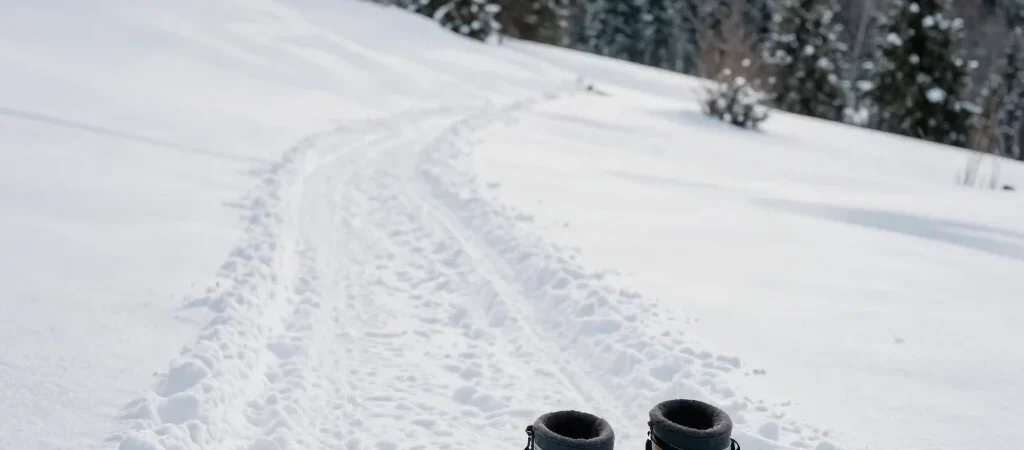
The first surprise for many people is how ordinary walking feels—until the snow gets deeper. Snowshoes spread your weight across a wider surface, helping you stay closer to the top of soft snow, but the extra width changes your stride.
Expect a wider walking rhythm
On a packed track, the steps can feel steady and straightforward. In deeper snow, you may lift your feet higher and place them a little farther apart, which takes more effort than walking on a clear path.
Snow changes the effort
A short route can still feel demanding if the snow is soft or the climb is sustained. I’d plan around the conditions rather than assuming summer distance and winter distance mean the same thing.
Keep the route conditions in view
Snowshoes are for travel on snow, not a substitute for checking whether a route is appropriate that day. Look for current local guidance, pay attention to steep terrain and changing weather, and choose a familiar, lower-consequence route for a first outing.