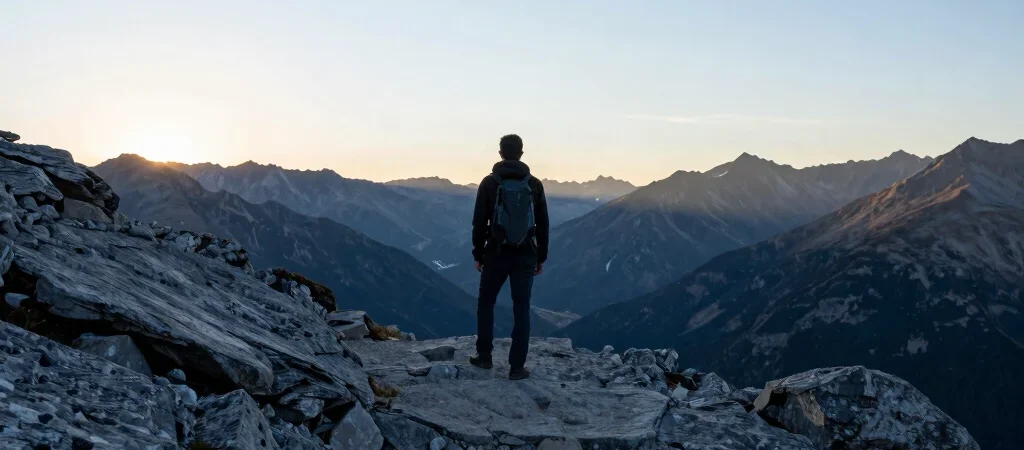
A sunrise hike starts before the view arrives. The trail may be dark, the air colder than expected, and every small task—finding a layer, checking a map, keeping a steady pace—takes a little more attention.
Begin with the return in mind
Work backward from sunrise to estimate when you need to leave, allowing time for breaks and slower footing in the dark. Check local trail guidance and weather, and bring a reliable light rather than counting on the first glow to help you see the path.
Let the light change gradually
The mountain often reveals itself in stages: a faint outline, a brighter horizon, then color on the nearest slopes. That gradual shift is what stands out to me; reaching a particular viewpoint is only one part of the morning.
Leave room for the descent
After sunrise, the route is still a hike, and the downhill can ask just as much attention as the climb. Keep a warm layer accessible, save enough food and water for the return, and give yourself time to walk out without rushing.